
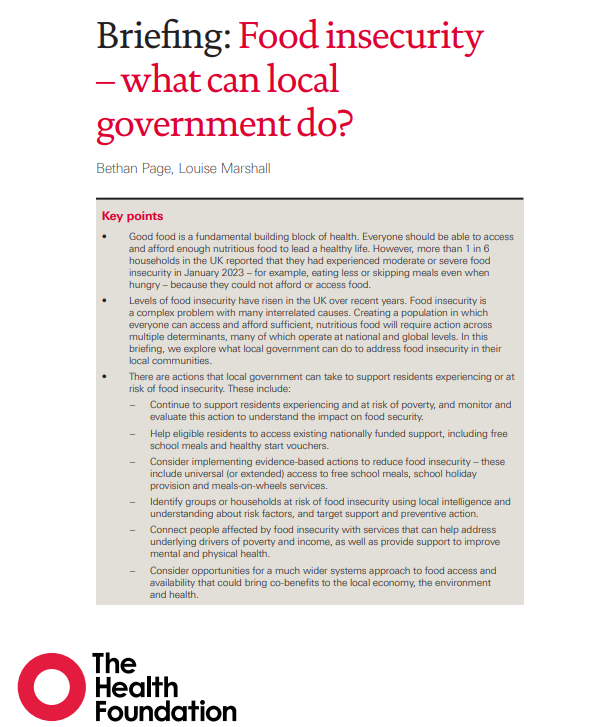
This briefing explores what local government can do to address food insecurity in local communities. This includes the actions that local government can take to support residents experiencing or at risk of food insecurity.
Resource
This briefing explores what local government can do to address food insecurity in local communities. This includes the actions that local government can take to support residents experiencing or at risk of food insecurity.


Everyone should be able to access and afford enough good food to live a healthy life.
But this is not currently the case in the UK, where levels of food insecurity have risen in recent years. More than 1 in 6 UK households reported experiencing moderate or severe food insecurity in January 2023, meaning they had eaten less or skipped meals because they could not afford or access food.
Food insecurity is a complex problem and poverty is a key driver. There are, however, actions that local government can take, both through taking steps to prevent people at risk from experiencing food insecurity, and through targeted support for those who need it.
This briefing looks at evidence-based actions local government can take to increase household food security among local populations.
Designed to aid Local Authorities in developing robust, evidence-based plans to enable Net Zero.
Already have an account? Login
 Guest preview of selected publicly available resourcesFull library of 1,000+ articlesCPD accredited e-learning coursesCase studiesDiscussion forum