
The concept and practice of Spatial and Temporal Modelling (STeM) is still in its infancy, however, the important role it plays in local Net Zero strategic planning is clear.
Resource
The concept and practice of Spatial and Temporal Modelling (STeM) is still in its infancy, however, the important role it plays in local Net Zero strategic planning is clear.
Provided by: North East and Yorkshire Net Zero Hub


The concept and practice of Spatial and Temporal Modelling (STeM) is still in its infancy, however, the important role it plays in local Net Zero strategic planning is clear.
Spatial and Temporal Modelling (STeM) is a spatial, data-driven modelling methodology with fixed targets (e.g. Net Zero by 2045), which allows its user to explore a range of credible pathways (e.g. energy decarbonisation) over a chosen period of time. Furthermore, it must be able to be updated to reflect local reality (e.g. a change of policy direction, updates to the grid etc). The four main attributes are laid out below:

Many local authorities are already using elements of Spatial and Temporal Modelling, particularly Geographical Information System (GIS) skills, to inform and support their Strategic Net Zero Planning. However, many local authorities also face barriers when implementing Spatial and Temporal Modelling.
These include, but are not exclusive to:
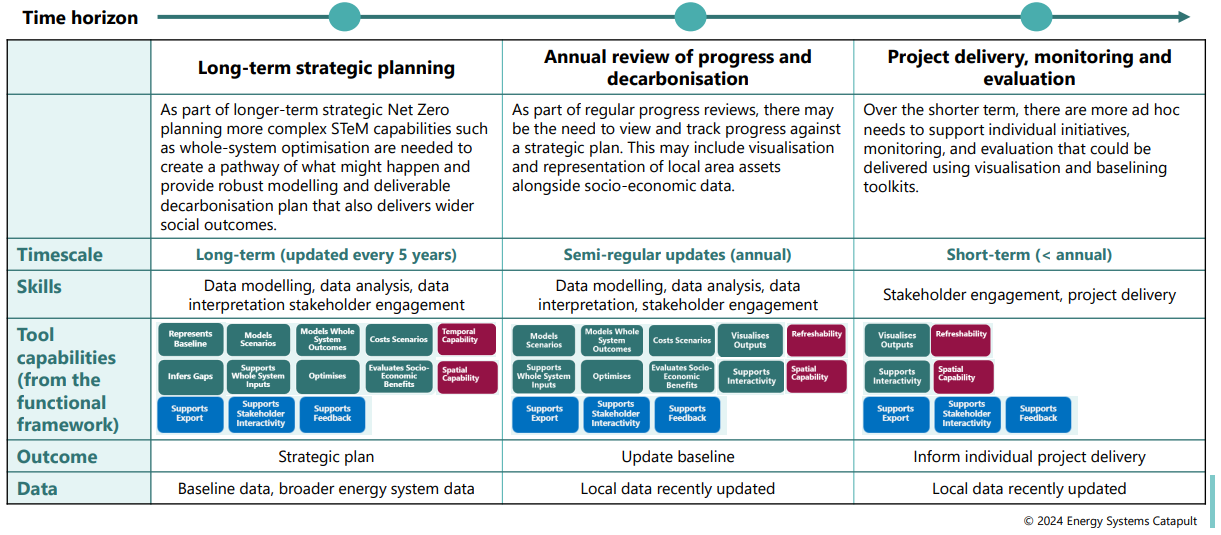
Having a plan and delivering projects are not mutually exclusive; they can influence and inform each other. There is value in proactively using STeM capabilities to develop plans and proposals, as in some cases funding can then follow.
|
|
|
Designed to aid Local Authorities in developing robust, evidence-based plans to enable Net Zero.
Already have an account? Login
 Guest preview of selected publicly available resourcesFull library of 1,000+ articlesCPD accredited e-learning coursesCase studiesDiscussion forum